Integrating Promotional Mechanisms with Betting Progressions in Online Roulette Environments
Sofia Patterson · Jun 7, 2026

Integrating Promotional Mechanisms with Betting Progressions in Online Roulette Environments
Remote roulette platforms continue to evolve their promotional structures in ways that intersect directly with common betting progressions such as Martingale sequences and Paroli ladders, creating layered wagering environments where bonus terms influence stake adjustments over multiple rounds. Data from industry tracking services shows that operators adjust minimum wagering thresholds to accommodate these progressions while maintaining compliance with regional licensing rules.
Promotional credits often come with playthrough requirements that align with the doubling patterns found in negative progression systems, allowing players to extend sequences without immediate depletion of personal funds. Researchers at academic institutions studying digital gambling patterns have documented how these alignments affect session length and total wager volume across mobile and desktop interfaces.
Core Elements of Promotional Structures
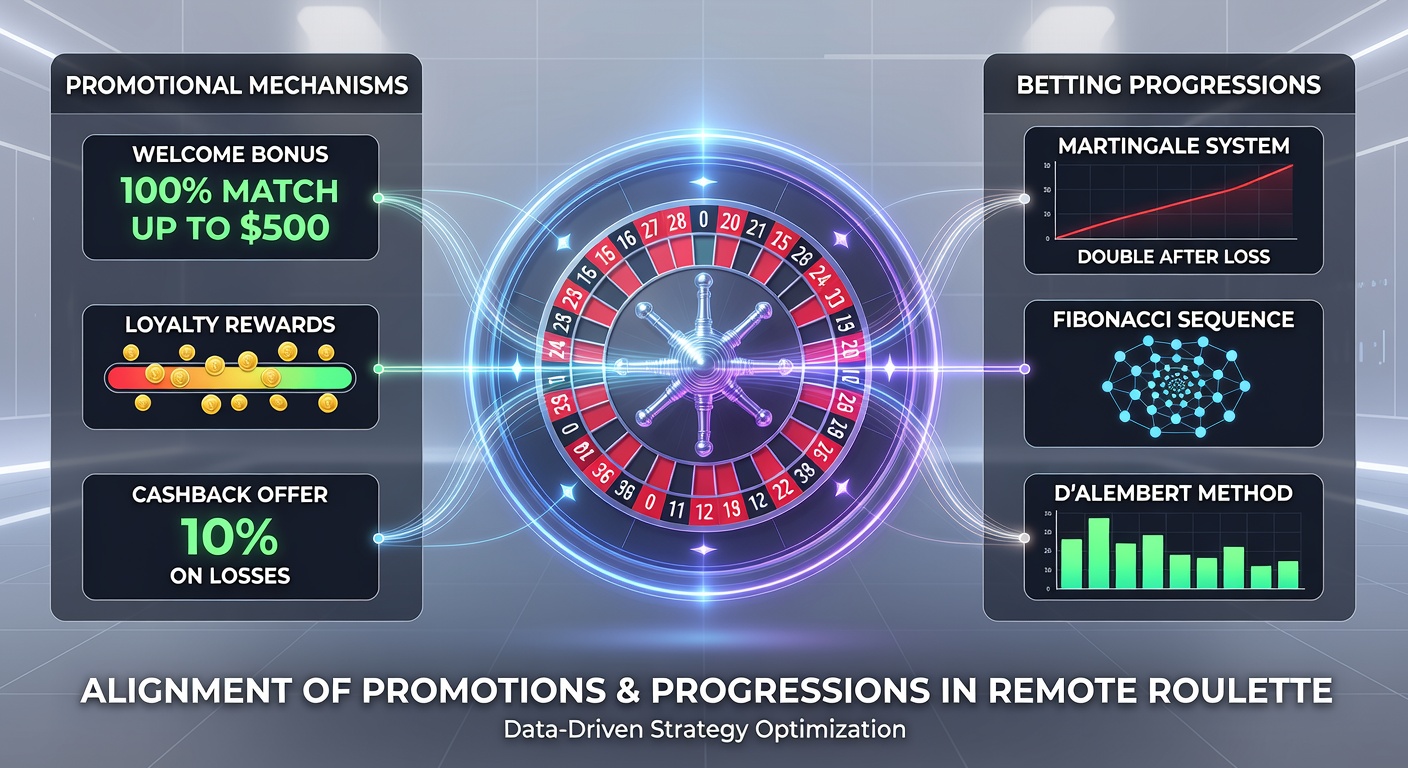
Bonus mechanisms in remote roulette typically include matched deposits, free spin allocations tied to wheel segments, and cashback percentages calculated on net losses, each carrying distinct eligibility criteria that interact with progression-based staking. Operators structure these offers so that bonus amounts scale with initial deposits in patterns that mirror the incremental increases required by systems like the D'Alembert method, where bet sizes rise or fall by fixed units after each outcome.
Terms and conditions specify eligible game contributions, with roulette bets frequently weighted at lower percentages toward playthrough targets compared to slot machines, which forces adjustments in how progression users allocate their sequences. Figures released by the Malta Gaming Authority in its quarterly oversight reports indicate steady growth in remote roulette participation through mid-2026, with promotional uptake rates climbing alongside refined bonus mechanics.
Alignment with Common Progression Models
Positive progression systems such as Paroli benefit from promotional resets that occur after successful streaks, because operators often cap bonus conversion at predefined win multiples that coincide with the three-win reset points built into the system. This creates opportunities where accumulated promotional value sustains the next base bet without external funding, provided platform rules permit continued play on bonus balances during the sequence.
Negative progressions encounter different constraints because doubling after losses can rapidly approach table maximums or bonus wagering caps, prompting operators to implement temporary stake multipliers or separate bonus wheels that reset sequences at controlled intervals. Studies published in the Journal of Gambling Studies have examined these interactions through simulation data, revealing measurable differences in completion rates for full progressions when promotional caps are present versus absent.
Platform-Specific Implementation Patterns
Many remote operators segment their roulette lobbies into standard and promotional modes, where the latter incorporates dynamic bonus meters that track cumulative wagers against progression milestones in real time. This segmentation allows systems to apply different contribution rates depending on whether a player is advancing through a Martingale ladder or maintaining a flat betting approach, with data logs showing higher bonus redemption volumes during periods of active progression use.
Live dealer environments add further variables because stream latency and table limits can interrupt sequence timing, leading platforms to offer synchronized promotional top-ups that restore balance mid-progression without resetting the count. Reports from the Nevada Gaming Control Board on digital gaming trends highlight similar adaptations in regulated markets outside the UK, where remote roulette traffic has increased steadily into 2026.
Regulatory Influences on Alignment Strategies
Licensing frameworks require transparent disclosure of how bonus funds interact with automated betting tools and progression software, which has prompted operators to embed clear indicators within their interfaces showing remaining playthrough relative to current stake levels. These disclosures reduce ambiguity around whether a doubling sequence remains viable once promotional balances enter the calculation, a detail that appears consistently across multiple jurisdictions.
Industry associations such as the European Gaming and Betting Association have compiled comparative analyses showing how different regulatory approaches shape promotional design, with some regions favoring fixed wagering multipliers that complement flat or mild progression models while others permit more flexible structures suited to aggressive ladders. Observers tracking these developments note that June 2026 updates to certain licensing codes introduced new reporting requirements around bonus-progression interactions without altering core mechanics.
Conclusion
Promotional mechanisms and betting progressions in remote roulette continue to intersect through structured terms that accommodate sequence adjustments while enforcing compliance boundaries, with available data indicating sustained platform investment in these integrations. Continued monitoring by regulatory bodies and research groups will likely refine how these elements coexist as remote environments expand.