Charting Roulette's Digital Progression: Simulations Evolving Into Live Dealer Play Through Bonus Mechanisms
Sofia Patterson · Jun 10, 2026

Charting Roulette's Digital Progression: Simulations Evolving Into Live Dealer Play Through Bonus Mechanisms
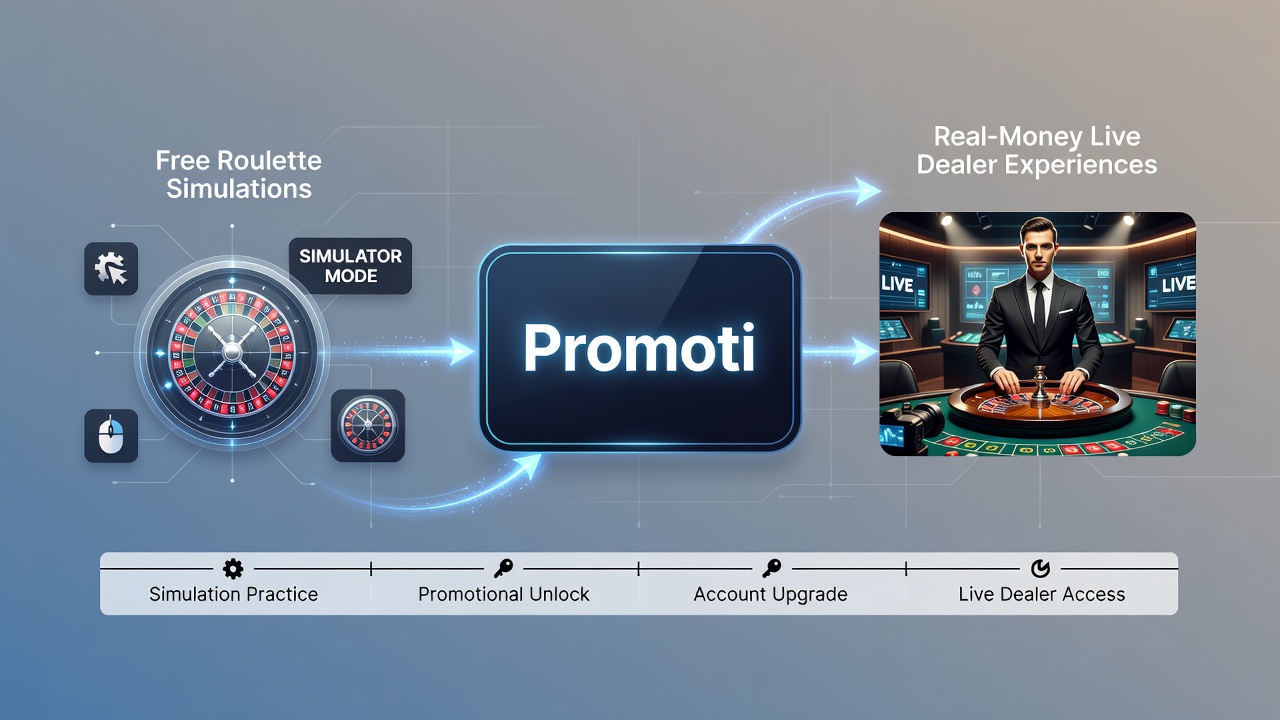
Digital roulette environments have expanded steadily over recent years, with players moving through distinct phases that start in simulated practice spaces and advance toward live dealer formats funded by real stakes. Promotional codes serve as structured entry points in this sequence, allowing individuals to test mechanics before committing actual funds, and data from industry reports indicate consistent uptake across multiple platforms.
Foundations in Free Roulette Simulations
Free roulette simulations provide environments where users engage with wheel mechanics, bet placements, and outcome probabilities without financial risk, according to analyses from gaming research institutions. These tools replicate standard European and American variants, featuring identical payout structures and random number generation systems that mirror those in paid versions. Observers note that participants often spend extended periods refining approaches in these settings, building familiarity with table layouts and payout ratios before any transition occurs.
Simulation platforms track user sessions through built-in analytics, revealing patterns such as repeated focus on outside bets like red-black or odd-even options during initial explorations. This stage establishes baseline understanding, since the absence of monetary consequences encourages experimentation with various betting sequences. Researchers at academic centers studying digital gambling behaviors have documented how simulation users gradually increase session lengths as comfort levels rise.
Promotional Codes as Transition Tools
Promotional codes activate specific incentives that convert simulation experiences into funded play opportunities, typically through no-deposit mechanisms or matched credits. These codes appear in structured campaigns run by operators, where registration sequences unlock access to live dealer streams or enhanced simulation features that prepare players for real-money tables. Industry data shows codes distributed via email lists or platform notifications often specify roulette-exclusive terms, including wagering multipliers tied directly to wheel outcomes.
Operators integrate code redemption into mobile and desktop interfaces, allowing seamless shifts from demo modes to live environments where dealers manage physical wheels through video feeds. Figures from North American regulatory filings demonstrate that such mechanisms correlate with higher retention rates among users who begin in simulations. Codes frequently include time-bound elements, prompting timely activation that aligns practice periods with promotional windows.
Entry Into Real-Money Live Dealer Formats
Live dealer roulette introduces human-operated wheels streamed in real time, complete with chat functions and multi-camera perspectives that distinguish them from automated simulations. Players apply accumulated knowledge from free sessions when placing wagers funded through code-activated balances, with minimum stake requirements varying by studio location and operator policies. Data compiled by European gaming associations highlight steady growth in live dealer participation across mobile networks, particularly where promotional pathways reduce initial barriers.
Transition metrics indicate that users who progress via codes exhibit distinct engagement profiles compared to those entering directly with deposits. Live formats incorporate RNG verification alongside physical wheel spins, ensuring transparency that builds on simulation training. In June 2026, platform updates across various regions incorporated enhanced streaming resolutions and integrated code trackers that display remaining wagering progress in real time during active sessions.
Case examples from operator logs reveal sequences where simulation veterans redeem codes to access VIP live tables, where higher limits apply and additional side bets become available. These progressions maintain continuity in betting strategies developed earlier, while introducing variables such as dealer pace and table atmosphere that simulations approximate but do not fully replicate.
Patterns Observed Across Platforms in Mid-2026
Market analyses from Australian gambling research bodies point to increased code usage coinciding with live dealer expansions in hybrid casino ecosystems. Users frequently combine simulation practice with targeted code redemptions to meet playthrough conditions attached to live table access. This approach appears in documented player pathways where initial free spins or credits convert into sustained live participation over multiple sessions.
Technical integrations allow promotional balances to transfer between simulation practice rounds and live dealer interfaces without interruption, maintaining session momentum. Reports from Canadian provincial regulators note that such fluidity supports broader accessibility, especially on devices optimized for both demo and real-time streaming. Observers track how code structures evolve seasonally, with June 2026 seeing emphasis on live roulette variants tied to specific regional events.
Conclusion
The progression from free roulette simulations to real-money live dealer experiences relies on promotional codes as measurable connectors within established digital frameworks. Data from diverse regulatory sources confirm these pathways operate consistently across regions, supported by platform features that preserve continuity between practice and funded play. As interfaces continue updating through 2026, the documented sequences provide clear routes for users advancing through each stage.