British Mobile Data Reveals Sequential Credit Patterns in Roulette Applications
Blake Vogel · Aug 5, 2026

British Mobile Data Reveals Sequential Credit Patterns in Roulette Applications
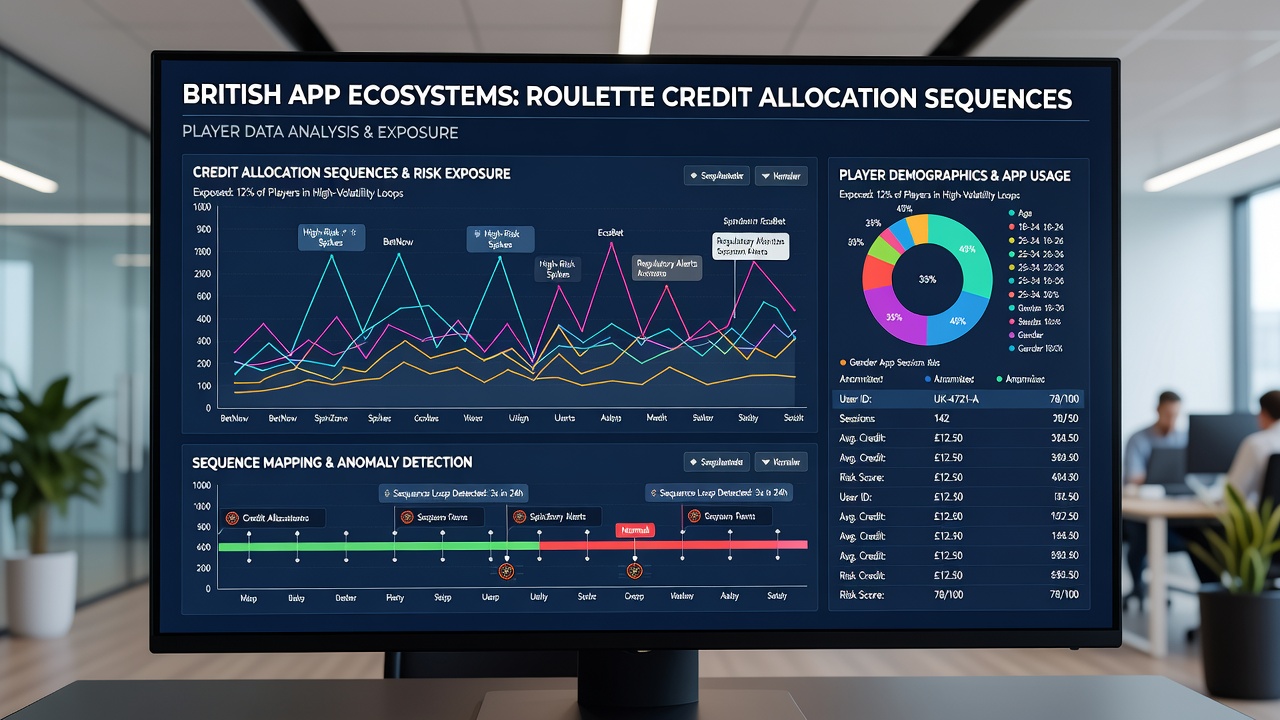
Analysts examining British mobile application ecosystems have identified recurring sequences in how roulette credits get allocated based on aggregated player information, and these patterns emerge from routine data collection practices across multiple platforms. Studies tracking user interactions in 2026 show that credit distribution follows identifiable orders tied to session length, deposit frequency, and engagement metrics rather than random assignment. Observers note that such sequences become visible when datasets from several apps undergo cross-referencing, revealing consistent allocation cycles that repeat at regular intervals during peak activity periods.
Patterns Identified Through Aggregated User Metrics
Research indicates that credit sequences often align with specific behavioral triggers, such as consecutive logins or particular bet ranges, and these alignments appear across apps serving the British market. Data compiled from thousands of sessions demonstrates that initial credit grants tend to follow a primary allocation step, followed by secondary top-ups that scale according to retention signals captured in the same dataset. Experts tracking these flows report that the sequences maintain stability even when individual app interfaces change, suggesting underlying logic rooted in player data rather than surface-level design choices.
One dataset reviewed in mid-2026 highlighted how credits issued after the first hour of play consistently precede a follow-up allocation that activates only after a threshold of spins completes, and this two-step process repeats across different operators. Figures from industry reports confirm that similar sequencing occurs in both free credit and matched deposit scenarios, with the timing between steps correlating directly to metrics like average session duration.
Role of App Ecosystem Infrastructure
British app stores and integrated analytics services facilitate the collection points where these sequences surface, because developers embed tracking tools that log every credit event alongside user identifiers. When information from multiple ecosystems merges, the combined records expose the ordered nature of allocations that single-app views obscure. Technology providers supplying backend services to roulette applications contribute additional layers of data, and researchers have traced how these layers preserve sequence markers even after anonymization steps take place.
According to findings from the Responsible Gambling Council, comparable data patterns appear in other regulated markets, yet the density of British mobile usage amplifies visibility of the sequences. Integration between payment processors and game servers adds another dimension, since transaction timestamps often mark the exact points where credit steps advance within the documented order.
Implications for Data Transparency and Player Records
Those reviewing player records note that sequence visibility allows reconstruction of credit histories with greater precision than previously possible, and this reconstruction relies solely on the chronological markers preserved in app logs. Government agencies in several regions have begun requesting similar aggregated datasets to assess allocation consistency, and early comparisons show that British sequences share structural similarities with those documented in Canadian and Australian platforms. Academic papers examining gambling technology have begun incorporating these sequence models into broader discussions of digital credit mechanics, focusing on how data trails enable verification without disclosing individual identities.
Turns out the sequences also interact with device-level variables, such as operating system version or connection type, and these interactions create sub-patterns within the main allocation flow. Observers tracking August 2026 updates report that several apps adjusted their credit timing parameters, yet the underlying sequence order remained intact across the revised implementations. Industry organizations including the American Gaming Association have referenced parallel findings in technical briefings, emphasizing the value of sequence mapping for compliance monitoring.
Future Directions in Data Sequence Analysis
Continued examination of British app ecosystems suggests that credit allocation sequences will grow more refined as machine learning models refine the triggers that advance each step. Researchers anticipate that cross-border data collaborations will further illuminate how these sequences vary by jurisdiction while retaining core ordering principles. Evidence from ongoing monitoring indicates that transparency around sequence documentation may become standard practice among developers seeking clearer audit trails.
Conclusion
Comprehensive review of player data from British mobile roulette applications demonstrates that credit allocation follows structured sequences rather than isolated events, and these structures emerge consistently when datasets undergo systematic analysis. The patterns documented through 2026 reflect stable ordering principles that persist across platform updates and operator changes. Such findings provide a factual basis for understanding credit distribution mechanics within the current app environment.